A Day in the Hide: Eagles, Snow, and the Quiet Drama of Winter
There are days in wildlife photography that feel like gifts — rare, unpredictable, and unforgettable. They begin long before the sun rises and end long after it sets, stitched together by cold air, anticipation, and the stubborn hope that nature will reward your patience. Our recent trip into the winter landscape was exactly that kind of day, the sort you measure all future outings against.
Into the Darkness
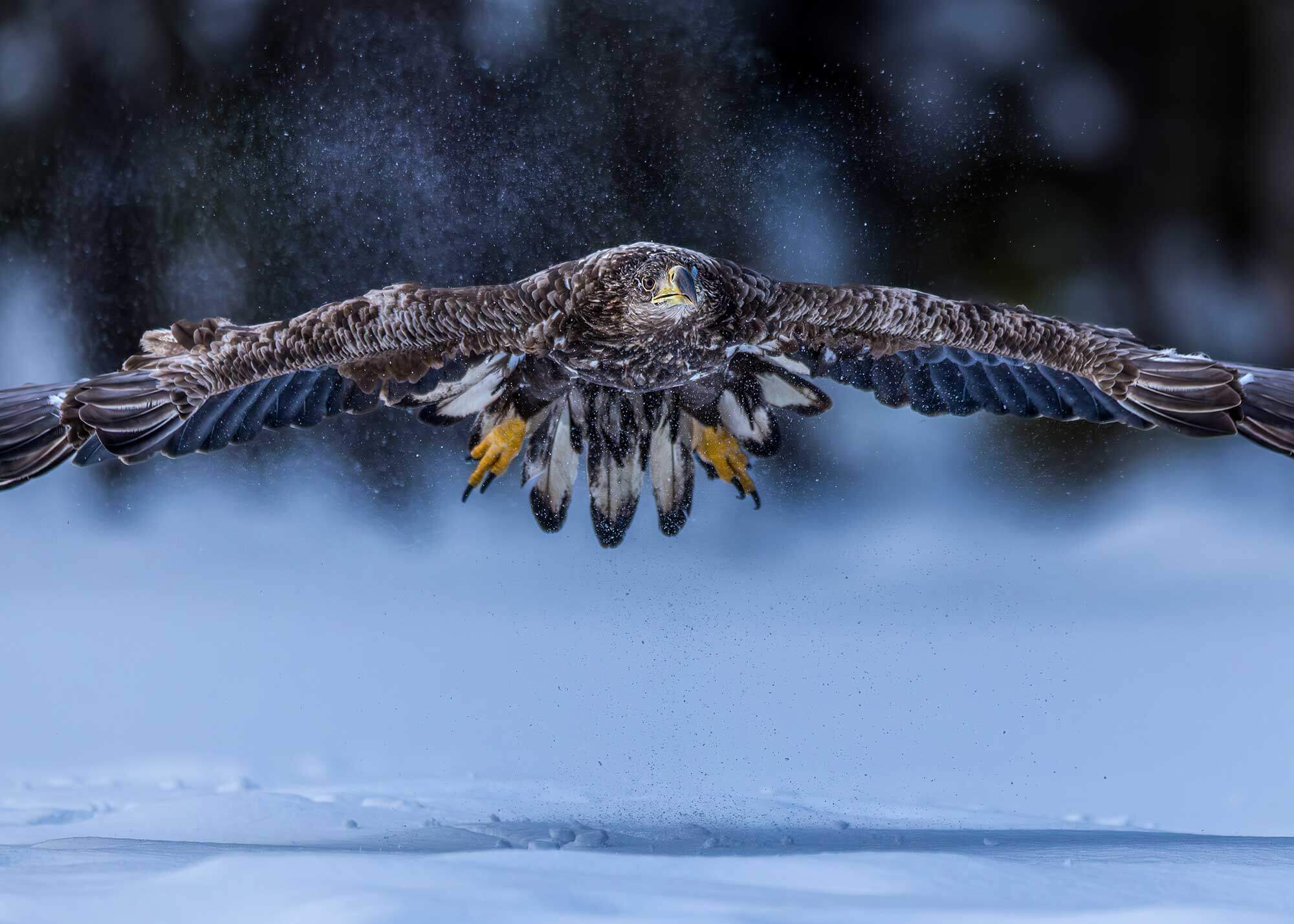
The adventure began in total darkness. The kind of darkness that swallows the beam of your headlamp and makes every sound feel amplified. We trudged through deep snow, each step sinking with a soft whump, our heavy backpacks digging into our shoulders. Camera bodies, long lenses, tripods, food, extra layers — everything we needed for a full day in the hide weighed on us like a reminder that wildlife photography is as much endurance as it is art.
The cold bit at our faces, but the silence was beautiful. Only the crunch of snow under our boots and the occasional whisper of wind kept us company. There’s something grounding about walking into the wilderness before dawn, guided only by memory and the faint outline of the landscape. It’s a ritual — a quiet promise to the day ahead.
By the time we reached the hide, our breath hung in the air like smoke, and the world was still pitch black. We slipped inside, settled our gear, and waited for the first hint of light.
The Forest Wakes
As dawn crept across the horizon, the landscape slowly revealed itself. Shades of blue and grey softened the snow, and the trees emerged from the darkness like silent sentinels. We scanned the sky, the treetops, the ridgelines — but no eagles circled overhead. No shadows glided across the snow.
But then came the sound.
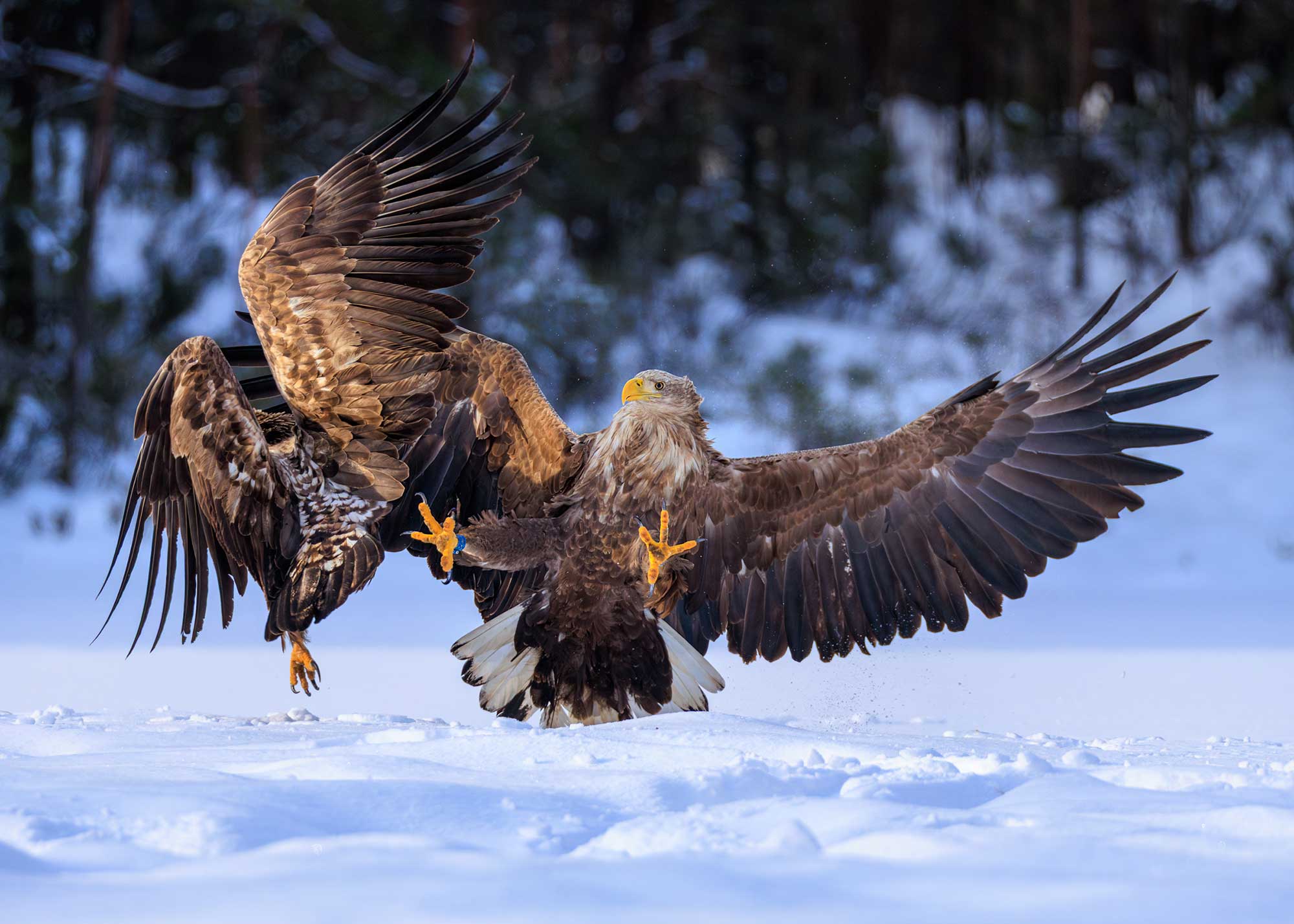
A heavy, deliberate thud of wings folding into a landing somewhere behind the hide. A sharp, unmistakable cackle echoing through the trees. We couldn’t see them yet, but we could hear them — golden eagles and white-tailed sea eagles announcing their presence long before they stepped into view.
That’s the strange magic of a hide: your senses sharpen. You learn to read the forest by sound alone. And that morning, the forest was telling us that the kings of the sky were gathering.
Golden Eagles Take the Stage
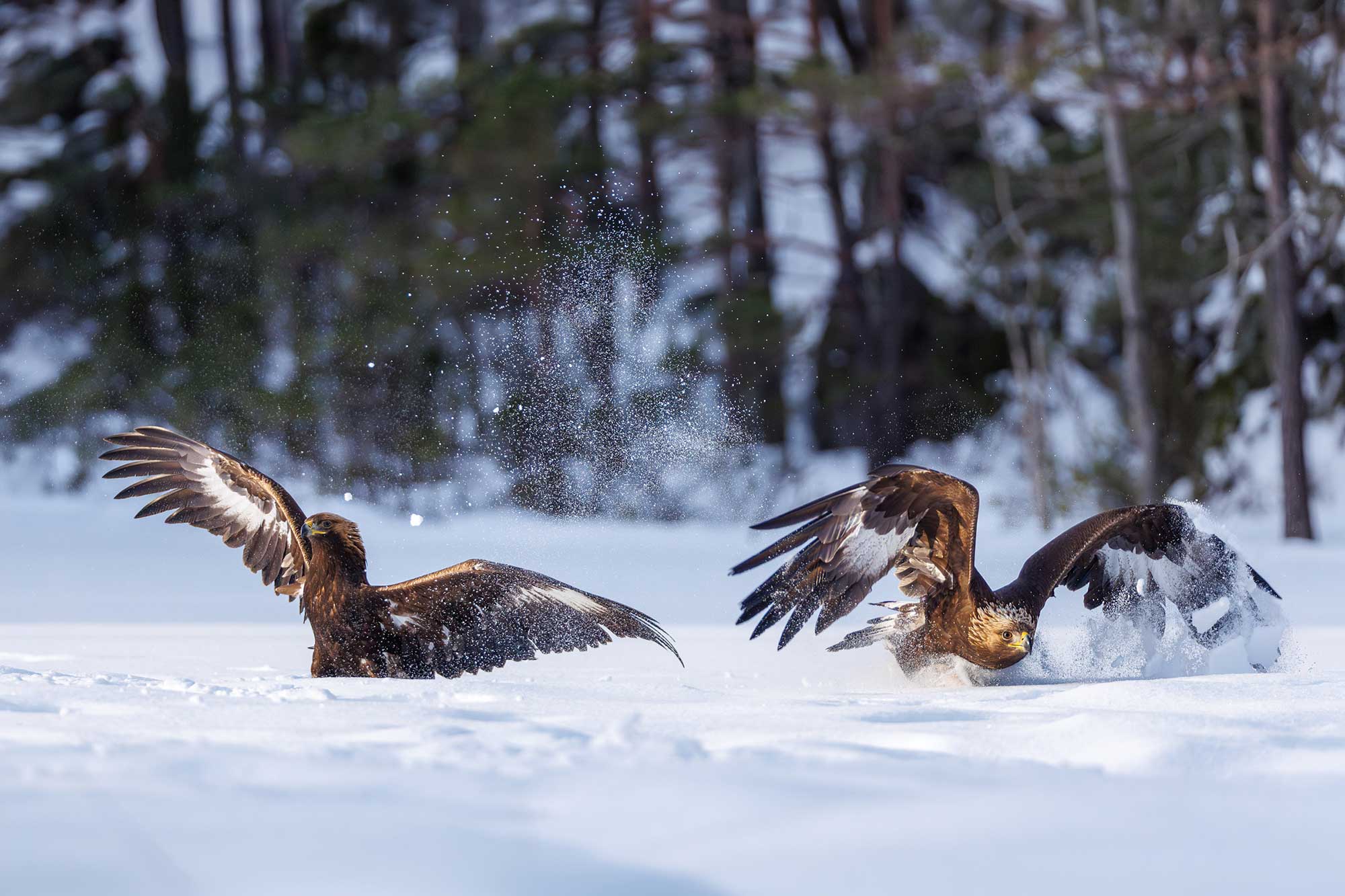
The first eagle to reveal itself was a golden eagle — a dark, powerful silhouette stepping into the open with the confidence of a creature that knows it rules the mountains. Moments later, another golden eagle arrived, landing with a force that sent a puff of snow into the air.
Two golden eagles in the same frame is already a gift. But two golden eagles with a disagreement? That’s the kind of moment photographers dream about.
They postured, wings half-spread, talons flexing, eyes locked. The tension was palpable even through the lens. And then, with a sudden burst of movement, they clashed — a flurry of feathers, snow, and raw power. It was over quickly, but the adrenaline it sparked stayed with us for hours.




The Sea Eagles Arrive
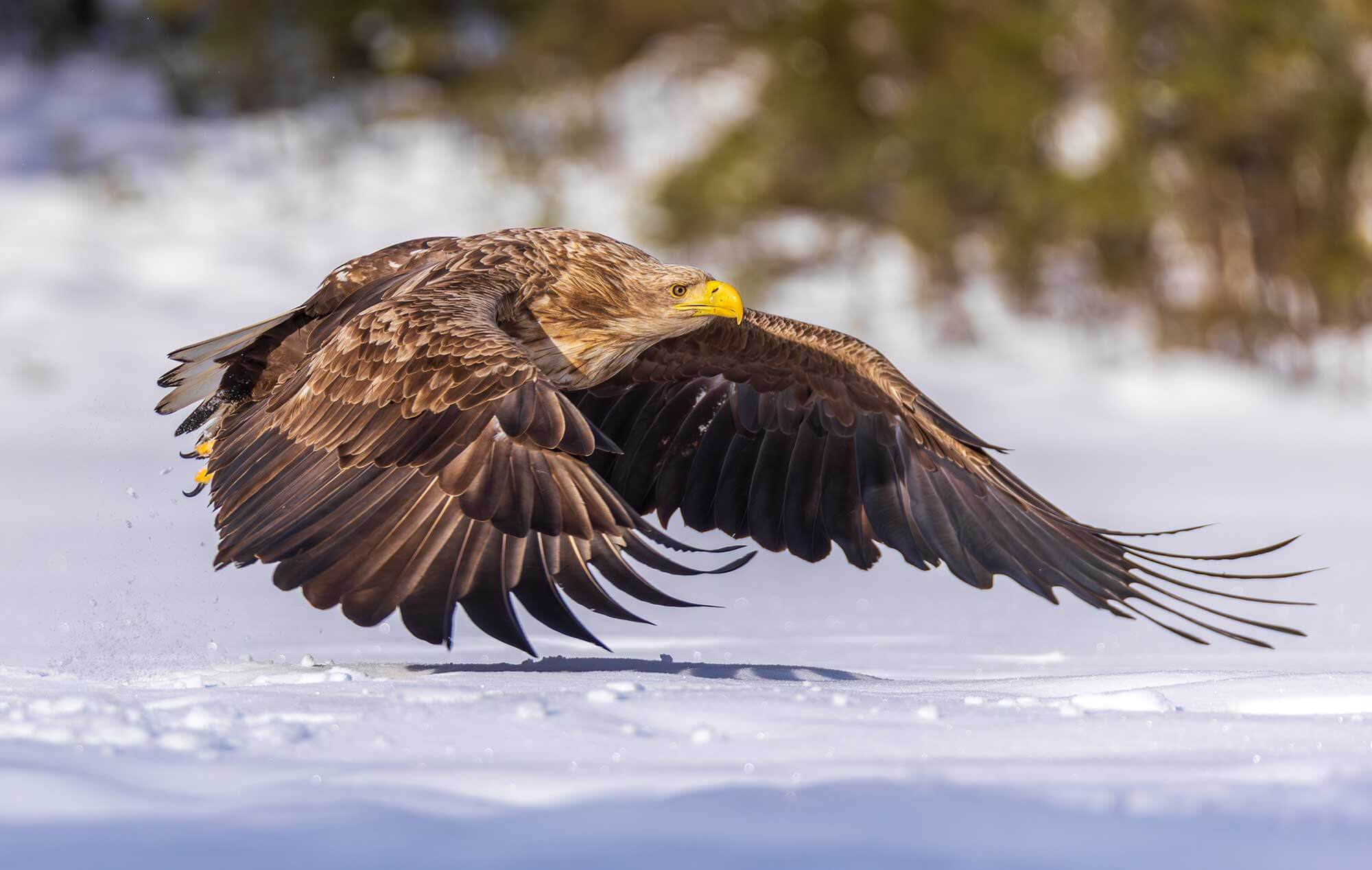
Just when we thought the day couldn’t escalate further, the white-tailed sea eagles made their entrance.
One landed in a nearby tree, its call echoing across the valley. Another answered from somewhere behind us. Soon, the forest was alive with their voices — sharp cries, territorial warnings, the rustle of massive wings shifting on branches.
They didn’t appear all at once. Instead, they came and went throughout the day, each one bringing its own energy. And they weren’t shy about asserting dominance.
We witnessed sea eagle vs. sea eagle disputes, full of dramatic wing spreads and aggressive lunges. Then came the cross-species confrontations: golden eagle vs. sea eagle. These moments were electric — two apex predators, each with its own style of intimidation, testing boundaries and hierarchy.
Every encounter was different. Every clash was a story.
The Rhythm of the Day
What made the experience so special wasn’t just the fights — it was the rhythm of it all. Long stretches of quiet tension punctuated by sudden bursts of action. The way the forest seemed to hold its breath before each arrival. The way our own breath caught every time a branch creaked under the weight of something massive.
We never had many eagles in view at the same time. It wasn’t chaos. It was a series of duels, each bird taking its turn on the stage. That pacing made every appearance feel significant, every moment worth capturing.
And capture them we did.
By midday, our memory cards were filling faster than expected. By afternoon, they were nearly overflowing. Every time we thought we had enough, another eagle arrived, another confrontation erupted, another opportunity demanded our attention.
The Long Walk Home
When the light finally faded and the forest fell quiet again, we packed our gear with the kind of exhaustion that feels earned. Then came the final challenge: the long walk back through deep snow, once again in total darkness. Our legs were tired, our backs sore, but our spirits were high. The cold no longer mattered. The weight of the backpacks felt lighter somehow.
We climbed into the car, heaters blasting, memory cards brimming with images we couldn’t wait to review. There’s a special kind of satisfaction that comes from a day like that — a blend of luck, patience, and being in exactly the right place at exactly the right time.
A day of wings and snow and adrenaline. A day of golden eagles and sea eagles. A day worth remembering — and one we won’t soon forget.